Gothenburg RoRo Terminal maximises rail capacity all year round


The article in short
-
GRT Intermodal at the Port of Gothenburg keeps rail freight moving all year round through flexible planning and close collaboration with rail operators and the Swedish Transport Administration.
-
Through Railport Scandinavia, terminals and other stakeholders share experience and develop joint solutions for more efficient freight transport.
-
Trailers account for half of GRT’s rail volumes. The remainder consists of tanks, containers and swap bodies.
-
GRT aims to increase its rail freight volumes by around 10% per year.
Flexible planning keeps freight moving
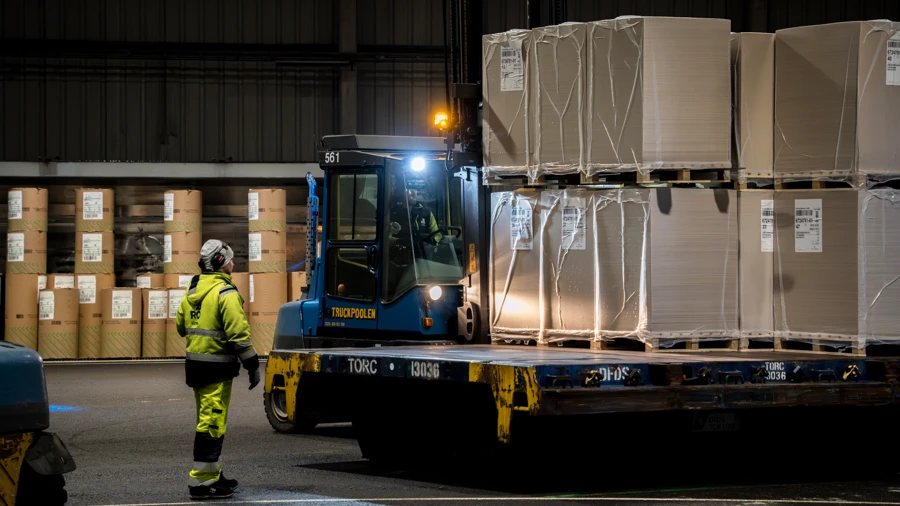
GRT operates two terminals at the Port of Gothenburg: the RoRo terminal and GRT Intermodal, a combined road–rail terminal. Here, we focus on the latter.
GRT’s operations can be summed up in three words: lifting, loading and unloading. But behind this simplicity lies a clear commitment to sustainability. Equipment running on Ecoflow or HVO100, electric forklift trucks and a hydrogen-powered terminal tractor are used on site. Electric reachstackers are also on the shopping list. For a company seeking to be part of a green supply chain, rail is a natural choice.
One of the people keeping everything running is Emma Meltin, Deputy Bridge Manager Intermodal. Together with rail operators, the Swedish Transport Administration and other stakeholders, she plans timetables and shunting operations while managing both anticipated and unexpected disruptions. Heat-buckled rails, slippery tracks caused by fallen leaves and frozen points are just some of the challenges that call for quick decisions.
“No two days are the same. That’s why flexibility and customer focus are our most important superpowers,” she says.
Collaboration that strengthens the entire freight hub
Collaboration with the Gothenburg Port Authority and the Railport Scandinavia network is another key factor.
“We have a very good dialogue. The Gothenburg Port Authority takes part in our coordination meetings with the Swedish Transport Administration, and our managers work closely with the port. Through Railport Scandinavia, we also visit terminals further afield, giving us valuable insights and new solutions that benefit everyone involved.”
She frequently returns to the willingness to find joint solutions. At the Port of Gothenburg, competition is no obstacle – it is a driver of progress.
“Everyone considers what is best for Gothenburg, the port and Sweden. We serve different markets and handle different types of cargo, so we complement each other more than we compete.”
“I cannot stress enough how important that understanding is,” says Richard Mellgren, Senior Business Development Manager at the Gothenburg Port Authority. “One of the reasons for the Port of Gothenburg’s success is that so many stakeholders see the bigger picture and recognise that, together, we can make an even greater impact.”
The goal: more freight by rail
Trailers account for half of GRT’s rail volumes. The remainder consists of tanks, containers and swap bodies. This variety makes the terminal an important link in Swedish industry’s supply chains. For Emma Meltin, the importance of rail is clear. She offers a concrete example:
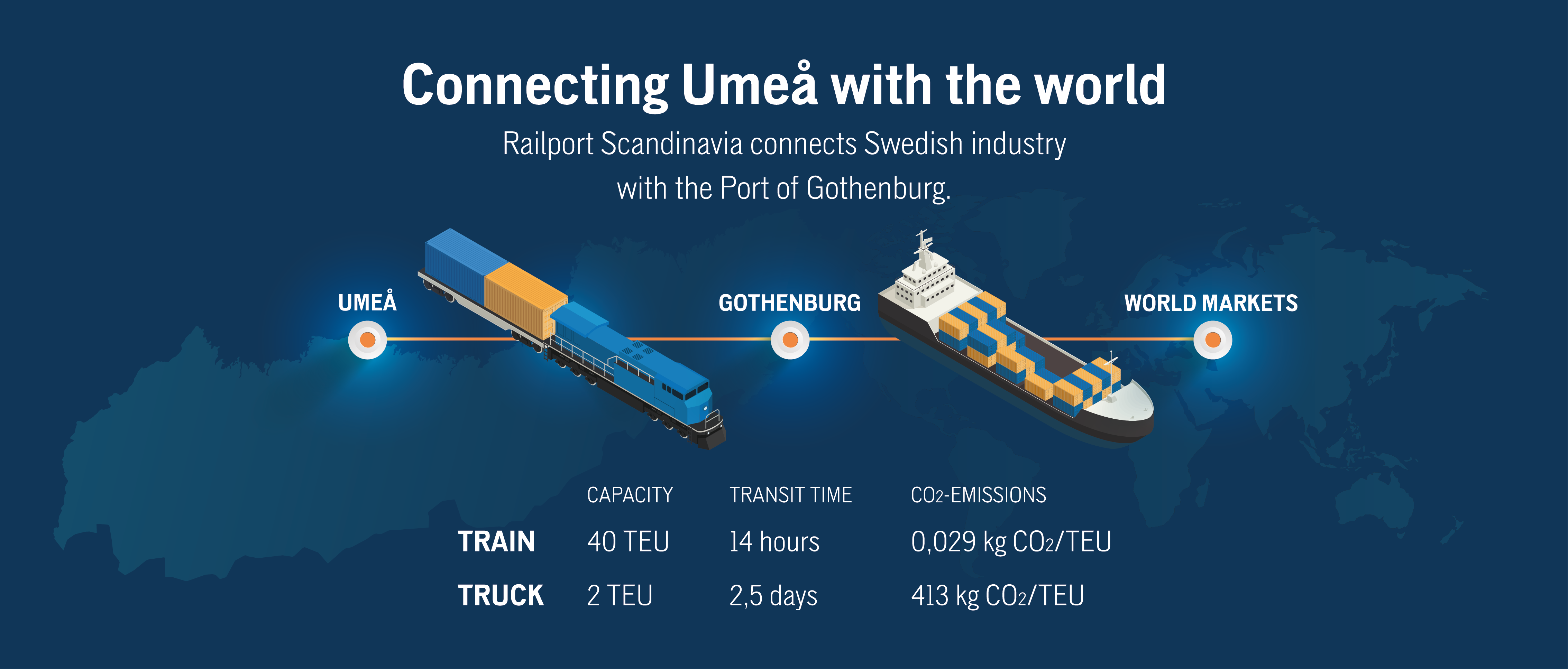
“A train from Umeå to Gothenburg takes 14 hours and carries 40 TEU. A truck would carry two TEU and take 2.5–3 days. Arken Intermodal Terminal has around 25 shuttle services a week. Rail saves both time and money while significantly reducing emissions.”
GRT aims to increase its rail freight volumes by around 10% per year. Achieving this requires the Port of Gothenburg to continue growing in a way that gives all operators room to develop. She is confident that this will happen.
“It’s the willingness to pull in the same direction that makes the difference,” Emma Meltin concludes.