More efficient cargo flows to and from the Nordic region
Connect with customers and suppliers across the Nordic region through the Port of Gothenburg. Railport Scandinavia combines a network of inland rail terminals across Sweden with the Nordic region’s most extensive range of global shipping services, helping your cargo move efficiently in both directions.

Reliable, sustainable supply chains connecting the Nordics with the world
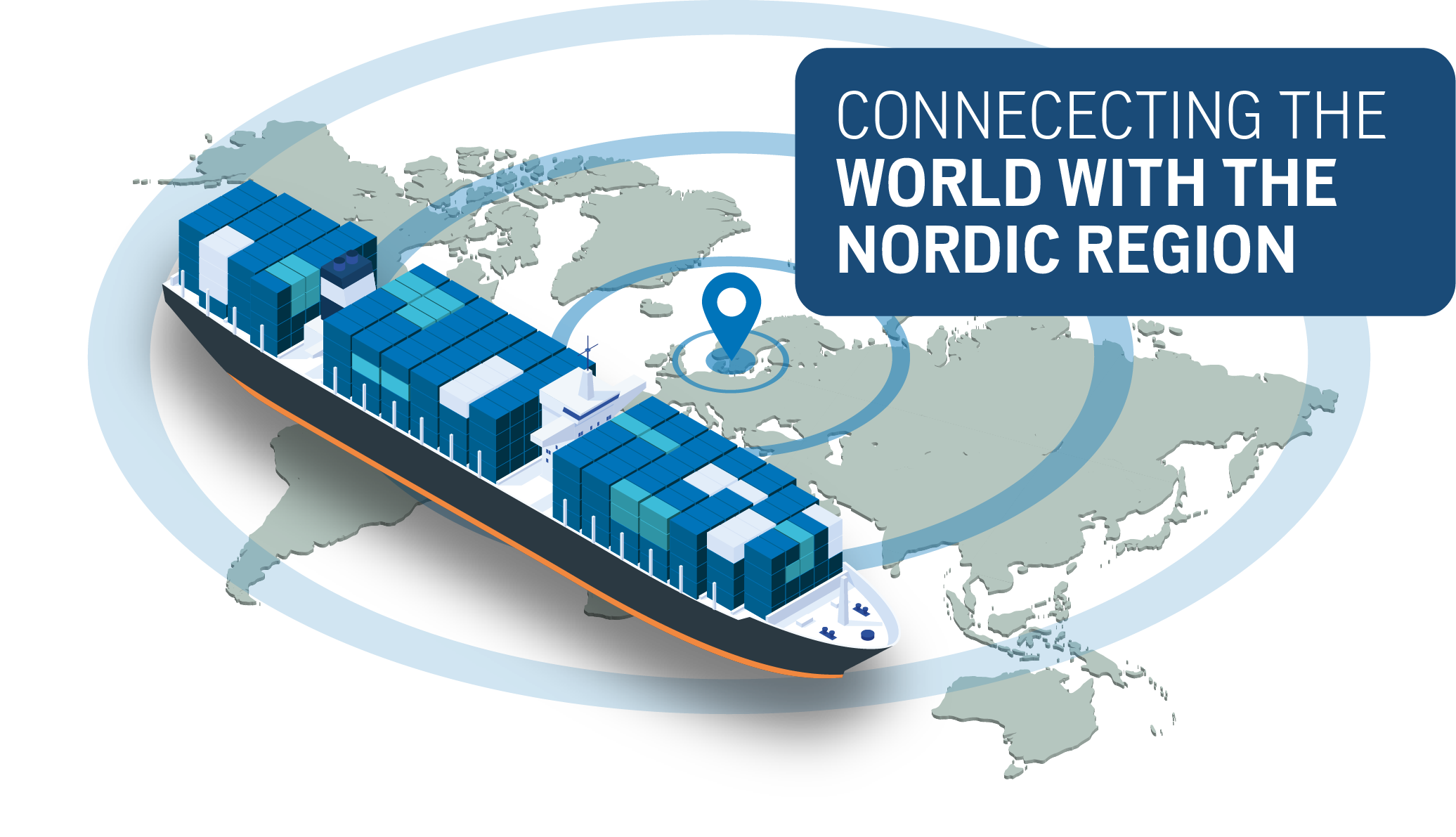
Flexibility, capacity and reliable deliveries with short lead times are essential in today’s global trade. Sustainable logistics must also make business sense, keeping your cargo moving efficiently while reducing emissions. Through the Port of Gothenburg, Railport Scandinavia combines inland rail terminals across Sweden with the Nordic region’s most extensive range of global shipping services. Together, these connections help you reach customers and suppliers across the Nordics and around the world.
Moving your cargo by rail instead of truck between the Port of Gothenburg and inland terminals offers benefits in both directions:
-
Greater capacity to transport larger cargo volumes
-
More reliable, faster and more cost-effective cargo flows
-
Reduced risk of bottlenecks
-
Significantly lower emissions per tonne transported compared to truck
-
Less congestion and wear on road networks
Why choose rail to and from the port?
Whether you are shipping to customers in the Nordics or sourcing goods from the region, Railport Scandinavia connects the Port of Gothenburg with inland terminals close to your customers and suppliers across Sweden. Rail carries your goods between the port and inland terminals, while direct shipping services connect Gothenburg with 70 destinations worldwide, without transshipment.
Together, they give your business access to the markets that matter. With up to 70 train movements a day and an extensive inland terminal network, Railport Scandinavia supports reliable, punctual and scalable cargo flows throughout the year.
A smarter way to go further
Since Railport Scandinavia was launched, rail’s share of container transport between the Port of Gothenburg and the hinterland has grown from 20% to 60%. A level few other major ports achieve. Daily rail services provide a reliable, cost-effective connection for your imports and exports, helping reduce emissions on the inland leg of your supply chain.
Explore the rail services connecting inland terminals across Sweden with the Port of Gothenburg.
Together, we connect your business to the Nordics and the world through seamless, sustainable and reliable transport
Case studies: Connecting global markets with Nordic businesses
-
Swedish Match – reliable exports with fewer delays
Swedish Match, a match manufacturer, uses rail to connect its production in Tidaholm, Sweden, with global markets through the Port of Gothenburg. Around 50% of its export volumes, approximately 275 TEU a year, travel by rail via the inland terminal in Falköping to connect with departing vessels. This approach improves delivery reliability, reduces the risk of delays and keeps costs down by avoiding unnecessary stops. Maximising capacity utilisation in 40-foot containers and using HVO100 renewable diesel and electric transport for first- and last-mile journeys also improves resource efficiency.
The result is a stable, scalable supply chain that gets cargo to the port in time, an arrangement Swedish Match describes as working “incredibly well” in practice. -
Waggeryds Cell – 100,000 tonnes of pulp from Sweden to the world
Swedish pulp producer Waggeryds Cell transports around 100,000 tonnes of pulp by rail each year. Containers are loaded and sealed in Vaggeryd, Sweden, and remain sealed until they reach the end customer. By shifting freight from road to rail, the company has removed the equivalent of approximately 4,000 truck journeys a year while simplifying its logistics and making deliveries more predictable. The nearby inland terminal in Båramo provides a fast, flexible connection to the Port of Gothenburg, where containers are transferred to vessels for onward shipment without unpacking or reloading the goods.
The result is shorter lead times, less risk of damage and a cost-effective supply chain. Direct rail connections to the port and direct shipping services to Asia help products reach their markets quickly and reliably. -
LX Pantos – up to 40% lower inland transport costs
LX Pantos, a global logistics provider, makes rail a central part of its international transport solutions to meet requirements for cost, lead times and resource efficiency. For the inland leg, rail can deliver cost savings of up to 40% compared with road transport, alongside shorter transit times and significantly lower emissions. Combining direct rail services to and from the Port of Gothenburg with proactive planning and close cooperation with partners creates stable, predictable cargo flows, even when disruptions occur.
Rail enables LX Pantos to handle large volumes efficiently, carrying goods over the main inland distances while trucks provide first- and last-mile connections. Together, these transport modes help goods reach customers worldwide on time, in the right condition and at the right cost. -
Ejendals – connecting global suppliers with Nordic distribution
Ejendals, a supplier of protective gloves and safety footwear, handles 800–1,000 TEU annually through the Port of Gothenburg. Goods from global suppliers continue by rail to Insjön, Sweden, for onward distribution to European customers by road. The company also serves markets such as the United States and South America by sea. Combining rail between the port and the inland terminal with road transport for distribution creates a reliable flow with the capacity to handle large volumes. Long-term planning, high container utilisation and close cooperation with logistics partners help maintain control in a changing business environment.
The result is a resilient, cost-effective supply chain in which direct rail connections and direct vessel calls help reduce the risk of disruption and keep deliveries on schedule.