Direct traffic between the Port of Gothenburg and Asia increases


The article in brief
- 462,000 TEUs were handled at the Port of Gothenburg during the first half of 2026, in line with the record year of 2025.
- Direct traffic with Asia increased, while the number of loaded containers rose and the number of empty containers declined.
- 268,000 TEUs were transported by rail, an increase of 2%. More than 60% of the port’s containers are transported by rail to or from inland destinations.
- New vehicle volumes increased by 17% to 144,000 vehicles, while RoRo volumes increased by 2%.
- Energy products increased by 19% to 11 million tonnes, while dry bulk increased by 7% to 165,000 tonnes.
Container volumes remain at record levels
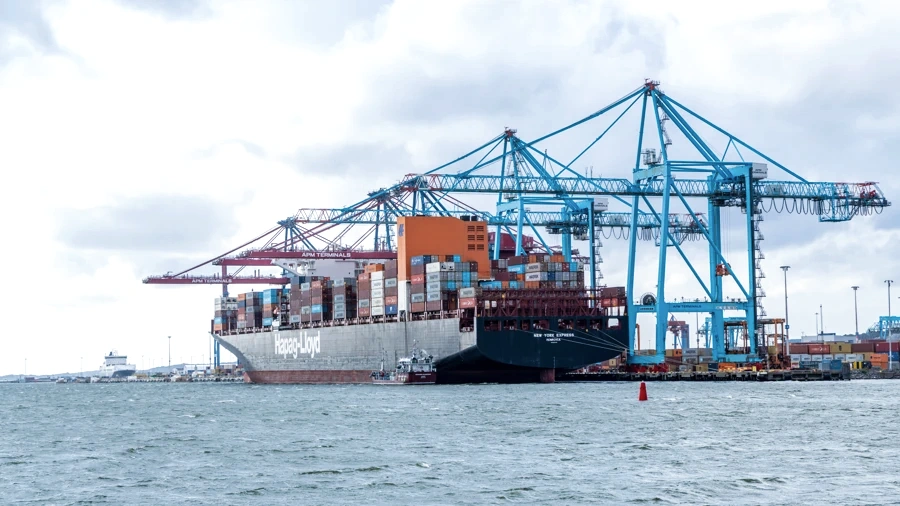
During January–June 2026, 462,000 TEUs* were handled at the Port of Gothenburg. This was in line with the corresponding period in 2025, which became the strongest year by volume in the port’s history.
Behind the unchanged container volumes, however, there was an increase in the actual amount of cargo transported. The number of loaded containers increased, while the number of empty containers declined. The development was driven primarily by continued growth in import volumes, while exports remained at approximately the same level as the previous year.
Another clear development during the first half of the year was an increase in the share of containers transported on the Port of Gothenburg’s direct services to and from Asia.
– The Port of Gothenburg is the only port in Sweden offering direct services for containerised cargo to and from Asia. For Swedish importers and exporters, this means efficient, sustainable and reliable transport with fewer disruption-sensitive stages. With congestion currently affecting many ports across Europe, the advantages of direct services without transshipment become even clearer, says Claes Sundmark, Vice President Sales at the Port of Gothenburg.
More than 60% of containers are transported by rail
Rail traffic to and from the Port of Gothenburg continued to grow during the first half of the year. A total of 268,000 TEUs were transported by rail, an increase of 2% compared with the corresponding period in 2025.
More than 60% of the containers handled at the Port of Gothenburg are transported by rail between the port and inland destinations. The development during the first six months of the year means that rail traffic is heading towards another record year.
Through Railport Scandinavia, the Port of Gothenburg is connected to around 30 inland terminals in Sweden, Norway and Finland. The network enables direct rail flows between inland locations and the port’s global shipping connections.
The Port of Gothenburg is the only port in Sweden offering direct services for containerised cargo to and from Asia. For Swedish importers and exporters, this means efficient, sustainable and reliable transport with fewer disruption-sensitive stages. With congestion currently affecting many ports across Europe, the advantages of direct services without transshipment become even clearer.
– Claes Sundmark, Vice President Sales at the Port of Gothenburg.
New vehicle volumes increased by 17%
The automotive segment also developed strongly. During January–June, 144,000 new vehicles were handled at the Port of Gothenburg, 17% more than during the corresponding period in 2025. The increase included traffic both within and outside Europe, and around three quarters of the vehicles handled were exports.
Intra-European RoRo traffic increased by 2% to 278,000 units. This traffic consists of trailers and other rolling cargo transported by vessel through frequent services between Gothenburg and key logistics hubs in Europe and the United Kingdom.
Growth during this period was driven primarily by development in traffic to and from Central Europe.
Energy products and dry bulk increased
The volume of energy products handled increased by 19% to 11 million tonnes during the first half of 2026. Both import and export volumes increased.
The growth should also be viewed in the context of the corresponding period in 2025, which was somewhat weaker than normal due to planned maintenance shutdowns in production.
Dry bulk also increased. A total of 165,000 tonnes were handled, 7% more than during the first half of 2025. The development was driven primarily by forest products such as paperboard and pulp.
Cargo volumes at the Port of Gothenburg in the first half of 2026
Overall, cargo volumes at the Port of Gothenburg showed positive development during the first half of 2026. Container volumes remained at record levels, while rail, RoRo, new vehicles, energy products and dry bulk all increased compared with the corresponding period in 2025. The table shows the development across the port’s different segments during January–June 2026.
| Segment | januari–june 2026 | januari–june 2025 | Change |
|---|---|---|---|
| Container, TEU | 462 000 | 463 000 | 0% |
| Railway, TEU | 268 000 | 262 000 | +2% |
| RoRo, units | 278 000 | 272 000 | +2% |
| New vehicles | 144 000 | 124 000 | +17% |
| Energy products, million tonnes | 11 | 9 | +19% |
| Cruise calls | 20 | 19 | +5% |
| Passengers | 585 000 | 579 000 | +1% |
| Dry bulk, tonnes | 165 000 | 155 000 | +7% |
*TEU (Twenty-foot Equivalent Unit) is an international standard measure of container capacity. One TEU corresponds to one 20-foot container.