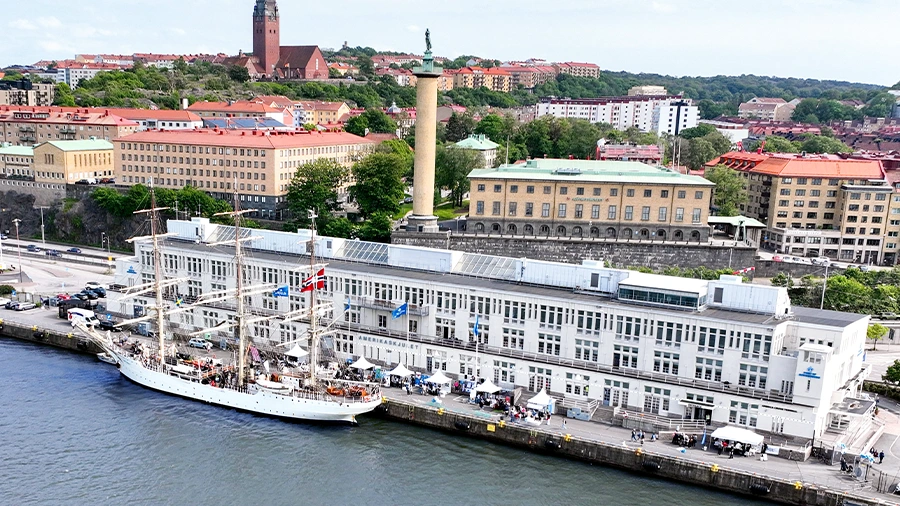
Tall ship sørlandet highlights the future of the ocean in gothenburg


Article summary
- The tall ship Sørlandet visited the port with a focus on the marine environment
- The event brought together researchers, decision-makers, and the public
- The project Return of the Sturgeon was highlighted as a concrete initiative
- Focus on biodiversity and protected marine areas
A visit that engaged and inspired
On 17 June, Stigbergskajen was filled with visitors of all ages. Throughout the day, they explored marine innovations, met researchers, and attended talks on the ocean’s role in climate and the future of shipping. The programme also included activities such as quizzes, film screenings, and tastings connected to marine resources.
At the centre was the impressive tall ship Sørlandet, which called at Gothenburg as part of a two-week voyage with six stops. On board were researchers and students from Sweden, Norway, and Denmark, aiming to increase understanding of the ocean’s role in climate, food supply, and biodiversity.
On the quay, several speakers including representatives from the Port of Gothenburg, academia, and politics highlighted the need for collaboration to ensure the long-term development of marine environments.
From knowledge to concrete action
A key message throughout the day was the importance of protecting marine environments. Researchers emphasised that many areas need to become strictly protected by 2030, including fishing bans, and that networks of protected areas are crucial to strengthening biodiversity.
A concrete example of this work was also presented on site. As part of the Return of the Sturgeon project, several sturgeon were released into the Göta River. The aim is to re-establish the species, whose behaviour helps oxygenate the seabed and create better conditions for other species.
By stirring up sediment, sturgeon promote the growth of small organisms, while also serving as host fish for threatened species such as the sea lamprey. The initiative illustrates how targeted actions can help restore functioning ecosystems.
The Port of Gothenburg is one of the actors supporting the project, an example of how collaboration between research and industry can be translated into practical action.
Hope for the future of our oceans
The visit of Sørlandet showed that the transition of marine environments is not only about goals and ambitions, but also about concrete actions here and now. By bringing together research, innovation, and engagement, a platform for dialogue was created and a reminder that solutions exist.
It is in the meeting between knowledge and action that the conditions for a better future for our oceans are created.