Terntank drives the transition in shipping with wind power and innovation


Article summary:
- Terntank aims to reach net zero emissions by 2040
- Fuel consumption has been reduced by 38% between vessel generations
- New vessels with sails reduce consumption by a further 28–30%
- Onshore power and batteries eliminate emissions at berth
- Collaboration with the Port of Gothenburg drives innovation
Innovation and energy efficiency at the core
Innovation, safety, and care for people have long been central to Terntank’s operations. As early as 1974, the company ordered double-hulled vessels, well before it became a regulatory requirement, and its closed systems ensure that crew members never come into contact with cargo while minimising the risk of emissions.
Energy efficiency has been key to fleet development. Between vessels ordered in 2012 and the next generation from 2016–2017, fuel consumption was reduced by 38%, from 22 to 16 tonnes per day. Improvements include everything from hull design and propellers to optimised operations.
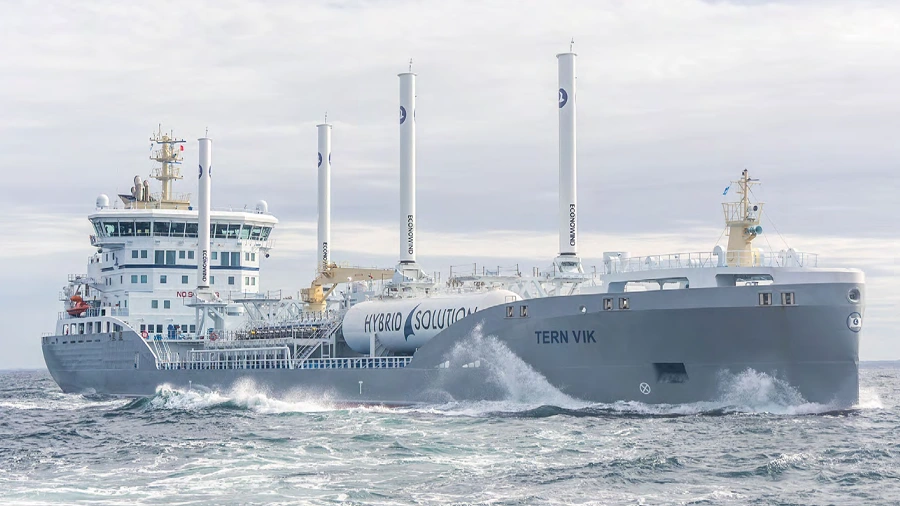
The latest generation of vessels builds on this progress. Engines are more efficient, vessels are equipped with batteries, and operations are optimised through just-in-time processes. In addition, five vessels have been ordered with foldable sails enabling wind-assisted propulsion, reducing fuel consumption by a further 28–30%.
Onshore power, batteries and new solutions
The Port of Gothenburg’s goal of reducing emissions from Vinga to berth has inspired Terntank to develop its own solutions. One concrete example is that the auxiliary engine, which previously started at Vinga, has been replaced by batteries.
This means emissions can be eliminated along this part of the journey. The batteries are charged either at sea via the shaft generator or at berth using onshore power.
Together with the Port of Gothenburg and other stakeholders, Terntank has also helped develop technology for connecting tankers to onshore power in explosive environments. This is a technically complex innovation that enables electrification even in the Energy Port.
The collaboration between Terntank and the Port of Gothenburg extends far beyond individual projects. Through regular meetings, joint risk assessments, and an open approach, the parties have created a platform for continuous development.
An important part of the collaboration is ensuring that incentives support the transition. In the Port of Gothenburg, working environment factors are included in the index for port fee discounts, encouraging investments in improved onboard equipment. Terntank also receives a 10% discount on port fees due to its strong environmental performance.
The path towards fossil-free fuels
Terntank’s transition also includes a gradual shift to fuels with lower carbon intensity. The goal is to replace fossil-based methanol with e-fuels such as fossil-free methanol, transition diesel vessels to HVO100, and gradually replace LNG with biogas.
The transition requires significant investments, but according to Terntank, access to fuels and the price gap between fossil and fossil-free alternatives will be decisive factors going forward.
With a target of net zero emissions by 2040, Terntank positions itself as a clear frontrunner in the energy transition of shipping.