ProTrain reduces emissions in the port with new shunting locomotives


Article summary:
- More than 3,700 freight trains operate in the Port of Gothenburg each year
- Rail handles around 40% of the port’s cargo volumes
- New shunting locomotives powered by HVO100 can reduce emissions from rail operations by up to 90%
- Emissions can decrease from 626 tonnes to around 60 tonnes
- The investment also improves the working environment
Efficient logistics with low climate impact
Each year, more than 3,700 freight trains are handled in the Port of Gothenburg, accounting for around 40% of total cargo volumes. Despite these large volumes, rail contributes only a small share of emissions compared to road transport.
ProTrain is responsible for all shunting operations in the port, which in 2025 amounted to more than 23,000 movements. The work is time-critical and requires high precision. Trains must be quickly moved from arrival tracks to terminals or assembled for departure, often on tracks with limited capacity.
New locomotives significantly reduce emissions
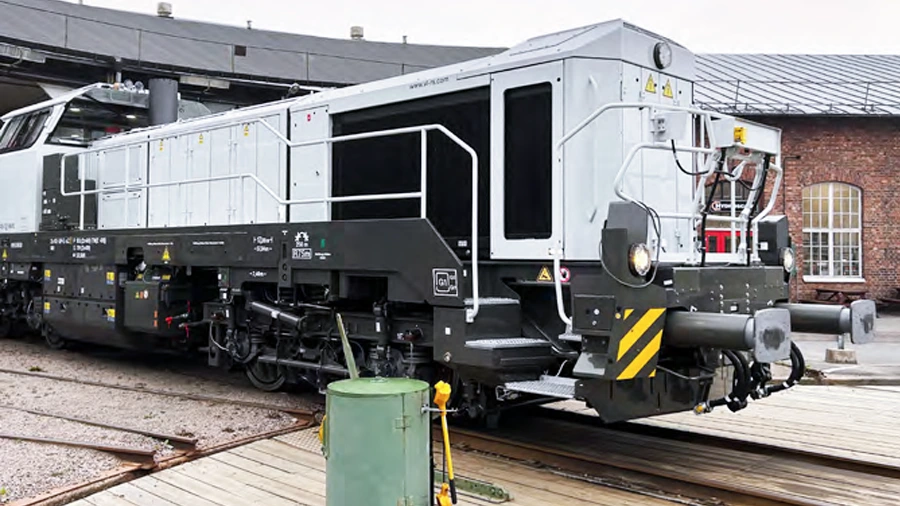
To further reduce climate impact, ProTrain has invested in new, environmentally classified shunting locomotives powered by HVO100. Two locomotives will be put into operation in Gothenburg, enabling a virtually fossil-free rail flow for major cargo volumes to APM Terminals.
“We will have two such locomotives in operation in Gothenburg, allowing us to create a fossil-free flow for the large cargo volumes to APM Terminals,” says Niclas Brahm.
The impact on emissions from ProTrain’s rail operations is significant. In 2025, emissions amounted to just over 626 tonnes of carbon dioxide. With HVO100, these can be reduced by 80–90%, corresponding to a saving of more than 560,000 kg of CO₂.
At present, HVO100 is the most viable option for combining emission reductions with maintained capacity. Electrification is not feasible in certain areas outside the port, and hydrogen technology is not yet considered sufficiently mature or cost-effective.
Improved working environment and clearer requirements
The investment also brings clear benefits for employees. Air pollution is significantly reduced, and noise levels are much lower compared to older locomotives. Ergonomics have also improved, including lower entry steps.
Although HVO100 is more expensive than diesel, the trend points towards a growing willingness to pay for lower-emission solutions. Market demands are becoming clearer, and the Port of Gothenburg’s climate targets are an important driver of this development.
Rail plays a key role
Even before the investment, rail transport had a significantly lower climate impact than road transport. With the new locomotives, emissions from rail operations in the port can be reduced to around 60 tonnes, while trains continue to handle approximately 40% of the port’s cargo. By comparison, truck transport generates emissions of around 15,000–17,000 tonnes within the port cluster’s measurement scope.
“Rail is important because it not only reduces emissions in the port but also in northern Sweden. Therefore, the best thing we can do is to choose rail. However, this requires increased investments, such as double tracks and the ability to run longer trains,” says Niclas Brahm.
The collaboration between ProTrain and the Port of Gothenburg is a key part of this progress.
“Our collaboration with the Port of Gothenburg works very smoothly. It’s great to work with a client who understands the challenges and shares our ambitions.”