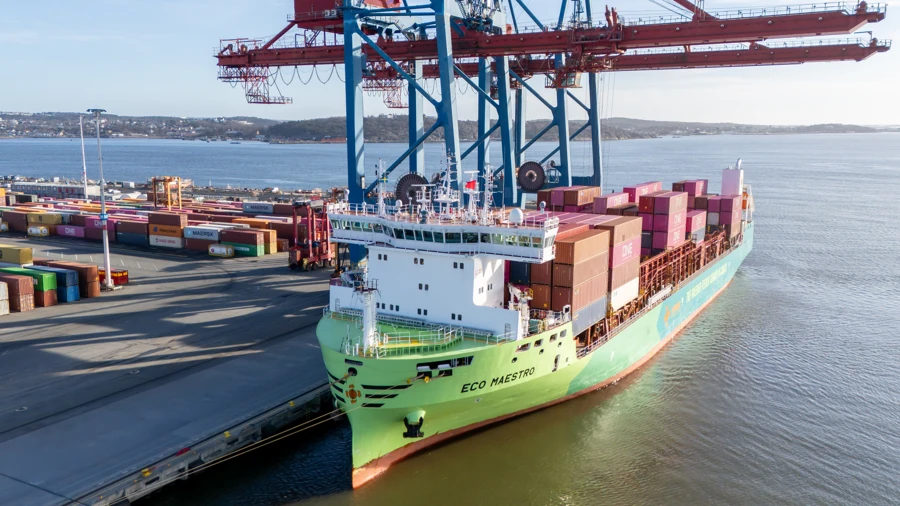
Methanol-powered container vessel calls at the Port of Gothenburg


Article summary
- Eco Maestro is a methanol-powered container vessel that has now called at the Port of Gothenburg
- Methanol can reduce emissions by up to 65% compared to traditional fuels
- More than 100 methanol-capable vessels are in operation globally, with over 300 on order
- The Port of Gothenburg is actively working to enable the transition to alternative fuels
- Weekly services between Gothenburg, Antwerp, and Rotterdam are integrating new fuels into existing flows
What is Eco Maestro and why is this call important?
Last week, Eco Maestro called at the container terminal operated by APM Terminals in Gothenburg. The vessel, owned by X-Press Feeders, is 148 metres long with a capacity of 1,264 TEU. Powered by renewable methanol, the call marks a clear step forward in the shipping transition—where new technologies are no longer pilot projects but part of everyday operations.
Methanol can reduce greenhouse gas emissions by up to 65% compared to conventional marine fuels, depending on how it is produced. When derived from biomass or captured carbon dioxide, it becomes a tangible alternative for shipping companies aiming to reduce their climate footprint.
At the same time, methanol offers a key advantage: it can be integrated into existing transport flows without requiring a complete overhaul of the logistics chain.
How fast is the development of Methanol vessels growing?
Eco Maestro was launched in 2024 as the first of a total of 14 methanol-powered vessels ordered by X-Press Feeders. Today, more than 100 methanol-capable cargo vessels are in operation globally, with over 300 on order or under construction.
Several of these vessels are already calling at the Port of Gothenburg, showing that this development is not a future scenario but happening here and now.
The Port of Gothenburg is actively working to create the right conditions for alternative fuels such as methanol. This includes securing access to renewable fuels and, together with industry partners, advocating for regulations that help close the cost gap compared to fossil alternatives.
As the largest port in the Nordics and a central hub for Swedish foreign trade, the port plays a key role in enabling the transition at scale.
What Does This Mean for Companies Transporting Goods?
Eco Maestro operates a weekly service between Gothenburg, Antwerp, and Rotterdam. This means that more energy-efficient options are now available within established transport setups. For cargo owners and logistics providers, it becomes easier to choose lower-emission transport without compromising on lead times or availability. As more vessels enter service, transport choices are increasingly becoming strategic, also from an emissions perspective.