Skandia Gateway wins Sweden Green Building Awards


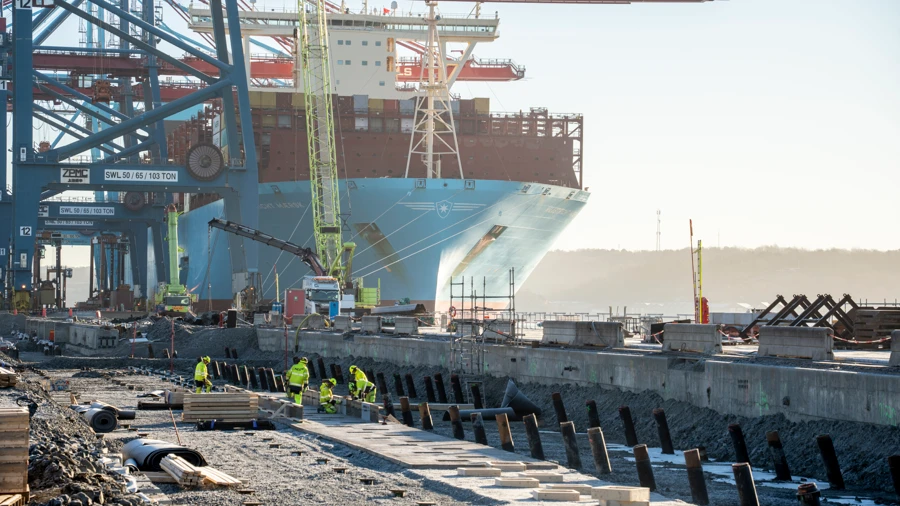
A win shared with future generations
Winning the award for sustainable infrastructure is clear proof that it is possible to build large, complex projects in a climate-optimised way. But for Project Manager Jan Andersson, the real win is long-term:
- We are of course proud and happy about the award. But with a 30% reduction in CO₂ emissions, the greatest win ultimately goes to future generations. We have shown that it is possible to reduce climate impact even in multi-billion-krona infrastructure projects through smart material choices, innovative solutions and close collaboration on site, says Jan Andersson, Project Manager for Skandia Gateway at the Gothenburg Port Authority.
Climate considerations have been integrated into the project from the very beginning.
- We have worked with climate calculations from day one and dared to question traditional construction methods. By re-thinking, innovating and focusing on the right materials, we have been able to reduce emissions in a measurable way. This knowledge will enable us to set even tougher sustainability requirements in future procurements, says Jan Andersson.
The jury’s reasoning: courage, innovation and measurable results
The jury highlighted the project’s holistic approach and its ability to deliver substantial climate reductions:
“In a demanding and complex environment, this year’s winner has shown courage and innovation by investing in climate-optimised foundations, systematic climate-reducing measures and circular solutions. The result is a reduction in climate impact of nearly 40 percent. With its holistic perspective on sustainability, the project sets a benchmark for the entire industry and proves that sustainability efforts not only reduce emissions but also drive quality and inspire future projects.”
How Skandia Gateway reduced its climate footprint
Below are some of the most important measures that contributed to the significant CO₂ reductions throughout the project.
1. Climate-optimised materials and construction
-
Low-impact materials, including recycled steel, reduced 15% of the project’s total climate footprint.
-
Optimised construction solutions, including reduced concrete thickness.
-
Concrete mixes with a lower cement content, partly replaced with slag.
-
More efficient concrete use – steel pipe piles were partly filled with crushed material.
-
Thinner layers of structural concrete.
-
More efficient sheet piling with reduced dimensions and scope.
-
Innovative solutions contributed by both engineers and on-site workers.
2. Low-emission machinery and transport
-
All machinery and transport ran on 100% HVO100 renewable fuel.
-
Electric machinery used for piling and drilling.
-
Coordinated orders and planned concreting reduced transport frequency.
-
Increased load capacity in excavation trucks reduced the number of trips.
-
Charging stations for electric vehicles installed on site.
-
“Return load” principle: bringing new material back from the landfill site.
-
No unnecessary idling of engines.
3. Circular construction principles
-
Sorting and reuse of asphalt, steel and rock material between projects.
-
Reduced future maintenance needs thanks to optimised sheet piling.
-
Reuse of materials including steel piles, steel beams, asphalt and cut-offs.
-
Reused sheet piles applied in sealing structures.
4. Innovative working methodology and climate governance
-
Continuous climate calculations showing emission reductions over time.
-
Strategic procurement work where CO₂ performance was a key selection criterion.
Skandia Gateway demonstrates that sustainability does not need to be a side initiative – it can be a driving force in large and complex infrastructure projects. Through systematic work, innovation and strong partnerships, the project has nearly halved its climate impact and set a new industry standard for sustainable port infrastructure.